
"recycling coffee waste"
80 article(s) found
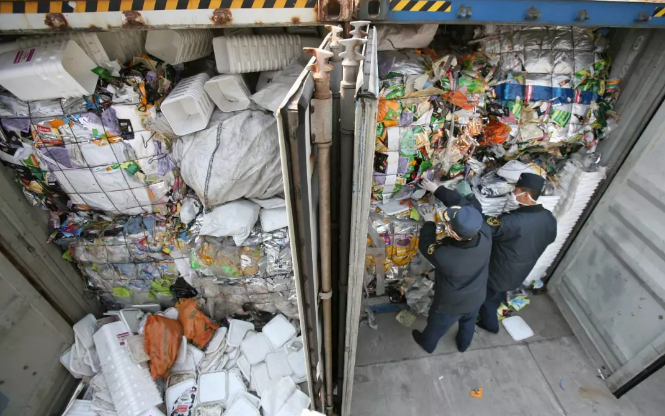
No foreign trash! Starbucks paper cups face garbage disposal crisis, China no longer accepts foreign garbage
Professional coffee knowledge exchange More coffee bean information Please pay attention to coffee workshop (Weixin Official Accounts cafe_style) A cruise ship loaded with thousands of tons of solid waste, sailing from a dock in a certain country, sailing to the high seas to trade with people, and then landing at the port of our country, through false reporting, concealment, hiding and other ways to avoid customs supervision, or directly bypass customs, that is, bypass customs into the country privately. ever

Waste recycling and recycling coffee grounds into coffee cups
Professional coffee knowledge exchange more coffee bean information Please pay attention to the coffee workshop (Wechat official account cafe_style) with the rise of environmental awareness, more and more countries are implementing plastic restriction policies. Australian scientists have recently come up with a way to convert coffee grounds into coffee cups so that coffee residues can be recycled. According to the comprehensive report, Australians consume 6 billion cups a year.

Recyclable coffee cups are coming soon.
Coffee cups for takeaway coffee are always transported to landfills as office waste, but now Martin Myerscough, the British inventor, has invented a method of making coffee cups that can be recycled up to seven times, like newspapers and cardboard. According to Martin Myerscough, a small difference in the mode of production may be significantly reduced because coffee cups
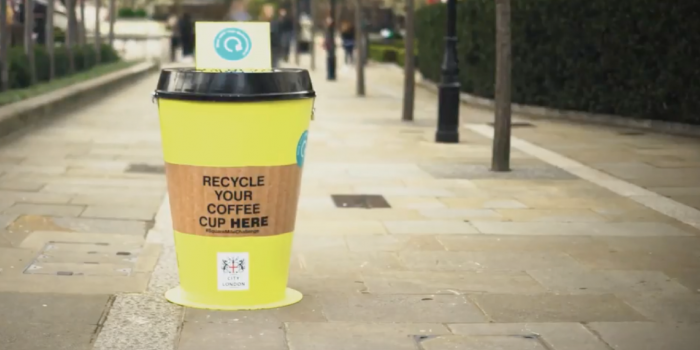
The truth about coffee paper cups: only 1% of paper cups are recycled
Professional baristas Please follow the Coffee Workshop (Wechat official account cafe_style) that only 1% of paper cups are recycled. In 2016, BBC filmed a war on waste (Hughs War On Waste) program on Hugh, including an episode that revealed the truth about the recycling of coffee paper cups. According to the program, about 7 million coffee paper cups are discarded in Britain every day, which is equivalent to 2.5 billion a year and needs to be cut.

Murder! Murder! Starbucks quietly murders the earth with 4 billion takeout cups every year!
For professional baristas, please follow the coffee workshop (Wechat official account cafe_style). Every year, Starbucks provides customers with 4 billion disposable paper cups. There may be a cup of yours or dozens or hundreds of cups. But have you ever wondered where these cups ended up? Some things are not what you think. Hilo Britt (Shiloh Britt) said to the Silicon Man.

Will reusable coffee cups necessarily be more environmentally friendly than disposable coffee cups?
Professional coffee knowledge exchange more coffee bean information Please pay attention to the coffee workshop (Wechat official account cafe_style) is any item more symbolic of our modern disposable culture than disposable coffee cups? When he drove a bus through London in March 2016, they were vilified by celebrity Hugh Fearnley-Whittingstall 's war waste campaign in 10000.

McDonald's Coffee Reusable Coffee Cup Program loop Recycling to solve plastic pollution problem
World first: McDonald's UK pilot reusable coffee cup program in September last year, McDonald's, the world's largest restaurant chain, announced that it would try out a reusable packaging scheme in the UK to fulfill its promise. The fast food giant partnered with zero waste delivery platform Loop to launch the first zero waste packaging solution to cover its six outlets in the UK.
Recycling can be addictive?! Starbucks' environmental protection can be really extreme!
As one of the largest coffee chains in the world, Starbucks consumes more materials every day than you can imagine. Although coffee beans are the most consumed goods in coffee shops every day, Starbucks is also a big consumer of plastics. Today, Starbucks has gradually transformed into a brand that pays attention to environmental protection.

In Brazil, cigarette butts and coffee grounds are all treasures.
Professional baristas Please follow the Coffee Workshop (official Wechat account cafe_style) recently, a kind of green iron box with round holes appeared on the streets of many cities in Brazil. This eye-catching sign is the cigarette butt recycling box: smokers can put the cigarette butts into it, which can be recycled and sent to the factory for processing for papermaking, etc. In recent years, Brazil has turned waste into treasure and asked for energy from garbage.

Starbucks does not need disposable cups? what is Starbucks Recycling Cup? Japan's Starbucks tries out reusable cups
Starbucks in Japan has also proposed a trial of reusable cups. According to related reports: Japan Starbucks coffee from the 22nd of this month, Japan Starbucks provides reusable cups to reduce the use of disposable coffee cups. Reusable cups are mainly for takeout orders, and consumers can use smart hands.

The gorgeous transformation of coffee grounds! Can be made into cups and clothes? The use of coffee grounds
At present, the world consumes an average of 2.25 billion cups of coffee a day, which is a very huge figure. A large amount of coffee grounds are produced after each cup of coffee. It would be a pity to throw the coffee grounds away directly, and globally, this way of handling is definitely a waste of resources. So is there any way to recycle these coffee grounds? Of course there is! Not long ago, the German

Coffee grounds making clothes and shampoo Taiwan manufacturers turn waste into treasure and seek business opportunities
Xingcai successfully converted coffee grounds into clothes made of special fibers through a patented process, which was adopted by large international factories. Taiwan's United Daily News according to Taiwan's United Daily News, recycling coffee grounds is a business opportunity from head to toe. Over the past three years, Taiwan has imported more than US $100 million worth of coffee beans every year. According to the statistics of Taiwan's Ministry of Economic Affairs, the number of chain coffee show shops in Taiwan has increased by 20%.
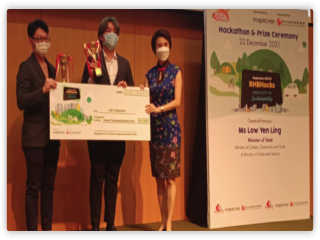
Coffee grounds into fuel? Singapore Institute of Technology student business proposal won the most innovative award! New use of coffee dregs!
The recycling of coffee grounds is nothing new, and coffee workshops have introduced the different uses of coffee grounds in many articles. The first step in reusing coffee is to dry the coffee grounds, because undried coffee grounds are very easy to mildew. From Singapore Institute of Technology

Nike uses coffee inspiration to make sneakers! What are the coffee grounds recycling companies?
Recently, Nike Air Force, a sports shoe brand owned by the world's well-known sports brand Nike, has designed a shoe with coffee elements. It is understood that the brown shoes of NIKE are inspired by coffee. Nike New year launched coffee-themed sneakers called CoffeeAF1. The new AF1 Coffee uses a coffee theme from color matching to details, and the upper uses light brown suede leather.
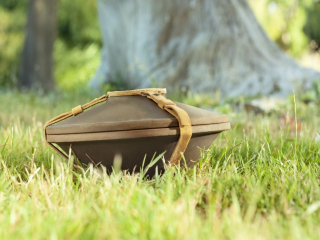
This is a 100% coffee grounds urn made of green recycled biodegradable?!
How can I use coffee grounds? Loyal fans of coffee workshops should know that coffee grounds can be used in many ways: exfoliating, deodorant and fertilizer. Advanced coffee grounds can be turned into fuel, road-building materials, and waterproof shoes. But recently, code workers have dug up a new use of coffee grounds-- urns.

Are you still drinking capsule coffee? The use of capsule coffee machine hides environmental pollution!
Professional coffee knowledge exchange more coffee bean information Please pay attention to coffee workshop (Wechat official account cafe_style) capsule coffee is popular all over the world in recent years, it is easy to operate, easy to carry, and there are dozens or even hundreds of flavors. Colorful coffee capsules are almost fashionable, but in Hamburg, Germany's second largest city, people see it as hidden behind it.
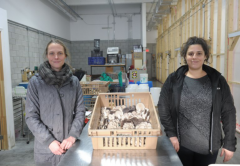
Canada: Using coffee grounds to cultivate oyster mushrooms brings good benefits
This is a veritable circular economy, where waste is recycled to increase mushroom productivity while avoiding waste and reducing pollution. Recently, an employee of a mushroom farm in Montreal, Quebec, Canada, introduced when displaying freshly picked oyster mushrooms. It is understood that the mushroom farm cooperates with local cafes all the year round to recycle coffee grounds for mushroom cultivation, and the benefits are good, and it can produce 20 per week.

Coffee residue tray Hong Kong students "skillfully" change kitchen waste into cutlery
According to Hong Kong media reports, students of the Hong Kong Institute of Science and Technology of higher Education have used their ingenuity to turn banana leaves into spoons and coffee grounds into bread trays. By upgrading and recycling kitchen waste, not only food waste can be reduced, but also waste can be reduced from the source. Solve the problem of disposable tableware. It is reported that the environmentally friendly spoon made from banana leaves comes from the School of Environment and Design of the Hong Kong Institute of Science and Technology of higher Education.

What should I do with the coffee grounds after brewing coffee? There are four uses of coffee grounds you don't know.
We know that the coffee industry has an impact on the environment. From planting, processing to transportation and roasting, each step of the coffee supply chain consumes a certain amount of energy, so it has its own carbon footprint. But what about the waste we produce when we drink coffee? Especially our waste coffee grounds? They are inevitable by-products of coffee consumption. Although many of us think it has something to do with

It took three years for the Chi Green team to use coffee grounds to make waterproof shoes and dirt-proof shoes. what is the value of coffee grounds?
Coffee grounds are no longer useless waste. Coffee grounds, as the most common garbage in cafes, are usually directly discarded as rubbish after being used. In fact, large areas of discarded coffee grounds can easily cause environmental pollution. It is understood that 8 million tons of coffee grounds are produced worldwide every year, and dispose of discarded coffee grounds.